
What Is a Professional Fiduciary in California
What a licensed professional fiduciary in California actually does, who has to hold the licence, how to check one, when a family should bring one in, and how the role works when the largest asset in the estate is a house.
A professional fiduciary in California is a person licensed by the Professional Fiduciaries Bureau to serve, for pay, as trustee, conservator, guardian, personal representative or agent under a power of attorney for people who are not their relatives[2]. Since 2009 anyone doing that work without a licence is breaking the law, with exemptions for attorneys, CPAs, enrolled agents, banks and trust companies[3]. Families usually bring one in when nobody suitable can serve, when siblings are in conflict, or when the trustee lives far from the property. Always check the licence first.
- What Is a Professional Fiduciary in California?
- Who Must Hold a Fiduciary Licence, and Who Is Exempt
- What It Takes to Become a Licensed Professional Fiduciary
- The Annual Statement: A Paper Trail Families Can Use
- How to Check a Professional Fiduciary's Licence
- When a Family Should Consider a Professional Fiduciary
- What a Professional Fiduciary Does Not Solve
- Questions to Ask a Professional Fiduciary Before You Hire One
- Where a Professional Fiduciary Meets a Property Sale
- If Something Goes Wrong: What the Bureau Can and Cannot Do
- Family Trustee or Professional Fiduciary: How They Compare
- The Podcast Conversation and How We Work With Fiduciaries
- Frequently Asked Questions
- Sources and How This Guide Was Written
A professional fiduciary is someone licensed by the State of California to hold a position of trust for another person: trustee, conservator, guardian, personal representative of an estate, or agent under a power of attorney. The licence comes from the Professional Fiduciaries Bureau inside the Department of Consumer Affairs, under the Professional Fiduciaries Act at Business and Professions Code section 6500 and following[1].
Families usually hear the term for the first time from an attorney, at a bad moment.
A parent has died or can no longer manage, the person named in the trust cannot or will not serve, or the siblings have stopped speaking, and someone suggests bringing in a professional. This guide explains what that person is, what the licence actually requires, how to check one, and what changes when the biggest thing in the estate is a house in Orange County. It draws on our podcast conversation with a working fiduciary and on the statutes themselves.
What Is a Professional Fiduciary in California?
A professional fiduciary is a person who holds a position of trust for someone else, for pay, as a business. In California the law draws the line by counting clients. Under Business and Professions Code section 6501, you are a professional fiduciary if you serve as conservator or guardian for two or more unrelated people at the same time, if you serve as personal representative of a decedent’s estate for two or more unrelated people at the same time, or if you act as trustee, health care agent or financial agent under a durable power of attorney for four or more people at the same time[2].
That counting rule is the whole idea. A daughter serving as trustee of her mother’s trust is not a professional fiduciary, because the person she serves is related to her. Relatives are not counted, and related trustors count as one[2]. The definition is aimed at the person who does this for strangers, again and again, and earns a living from it.
| Role | Who it serves | When it becomes “professional” under section 6501 |
|---|---|---|
| Conservator or guardian | An adult who cannot manage their own affairs, or a minor | Serving two or more unrelated individuals at the same time |
| Personal representative | The estate of someone who has died | Serving two or more unrelated individuals at the same time |
| Trustee | A trust and the people it benefits | Acting for four or more individuals at the same time, related people not counted |
| Agent under a durable power of attorney | A living person, for financial or health care decisions | Acting for four or more individuals at the same time |
The regulator is the Professional Fiduciaries Bureau, which sits inside the California Department of Consumer Affairs. It was created by legislation that took effect on January 1, 2007, to regulate non family member professional fiduciaries[1].
So when a probate attorney in Newport Beach tells a family “you may want a professional fiduciary for this,” what they mean is a licensed, independent person who will step into the trustee’s or conservator’s chair and be paid from the estate for carrying the legal duties that come with it.
Who Must Hold a Fiduciary Licence, and Who Is Exempt
Since January 1, 2009, nobody in California may act as a professional fiduciary, or hold themselves out to the public as one, without a licence issued under the Professional Fiduciaries Act[3]. That is section 6530 of the Business and Professions Code.
There are carve outs, and families should know them because they explain why some of the people who show up in a trust administration are not on the Bureau’s lookup at all.
Professionals already licensed elsewhere
Section 6530 exempts attorneys licensed under the State Bar Act. It also exempts two kinds of tax professional, certified public accountants and IRS enrolled agents, each only within the scope of their own licence or federal authorisation[3]. An enrolled agent who serves as a fiduciary and steps outside that scope is treated as engaging in unlicensed activity, unless they also hold a professional fiduciary licence[3].
Institutions and public agencies
Section 6501 also takes certain institutions out of the definition entirely. Trust companies are excluded, as are FDIC insured banks and their affiliates[2]. So are public agencies, which covers the public guardian, the public conservator, state and county agencies, and regional centers for people with developmental disabilities, along with employees of those entities acting within the scope of their jobs[2]. A narrow group of established charitable organizations acting as trustee of charitable trusts is excluded as well, and so is a person whose only fiduciary activity is as a registered broker dealer or investment adviser[2].
Family members
A family trustee does not need a licence. The counting rule in section 6501 does not count related individuals, so a son administering his father’s trust, or a sister acting under her brother’s power of attorney, is outside the Act[2].
What this means in practice. If someone who is not your relative, not a lawyer, not a CPA and not a bank is offering to serve as trustee or conservator for your family, and they do this for several families at once, they should have a licence number. Ask for it in the first conversation, and look it up before the second one.
What It Takes to Become a Licensed Professional Fiduciary
The licence is not a formality. Section 6533 sets the requirements, and they are more demanding than most families assume[4].
An applicant has to be at least 21 years old, submit fingerprints for a criminal background check, consent to a credit check, agree to follow the Professional Fiduciaries Code of Ethics, and pass the licensing examination the Bureau administers[4]. The application itself is signed under penalty of perjury[4].
On top of that, the applicant needs a combination of education and experience. The statute gives three routes in:
| Route | What the applicant needs |
|---|---|
| Degree | A bachelor’s degree or higher from an accredited college or university |
| Associate degree plus experience | An associate degree from an accredited college or university and at least three years of qualifying fiduciary experience |
| Experience alone | At least five years of qualifying fiduciary experience |
Qualifying experience means serving as a conservator, guardian, trustee, agent under a durable power of attorney or personal representative, or working in one of those roles for an employer such as another professional fiduciary or a financial institution[4].
Education before and after the licence
Before licensure, the Bureau requires 30 hours of approved education courses, including one hour of cultural competency[1]. After licensure, a fiduciary has to complete 15 hours of continuing education every year to renew, with two hours of that in ethics or cultural competency[1].
Fifteen hours a year is not a lot of time. It is enough, though, to mean the person has been in a room, at least once a year, with other fiduciaries talking about what went wrong for somebody else. A first time family trustee has no equivalent of that.
The Annual Statement: A Paper Trail Families Can Use
This is the part of the Professional Fiduciaries Act that I think families underrate. Under section 6561, every licensee files a statement with the Bureau when they are first licensed and again every year after that, and they sign it under penalty of perjury[5].
The statement is detailed. It has to disclose, among other things:
- the names of everyone the fiduciary currently serves, and of the trusts and decedents’ estates they administer, with court names and case numbers where a court is involved[5]
- closed matters the licensee has handled, again with case numbers and court locations[5]
- whether the licensee has ever been removed for cause from a conservatorship, guardianship, trust, estate or power of attorney[5]
- whether a court has found that the licensee breached a fiduciary duty[5]
- whether the licensee resigned from or settled a matter in which a complaint had been filed in court[5]
- any ownership interest the licensee or a family member holds in a business that receives payments from clients[5]
- any bankruptcy in the last ten years, and any criminal conviction[5]
Read that list as a family member and the point is obvious. The practical consequence of hiring a licensed professional is that there is a public record to check and a body to complain to. Neither exists when a relative is serving as trustee. That is not an argument against a family trustee, but it is the difference a family should weigh honestly.
The business interest disclosure deserves a second look in any estate that includes a house. If a fiduciary refers repairs or property management to a company they or a relative own, the statute expects that interest to be disclosed. Ask about it directly before anyone hires a vendor to work on the property.
How to Check a Professional Fiduciary's Licence
Check the licence before you engage anyone. The Bureau publishes a lookup that shows whether a licence is current and any disciplinary history, the same way you would check a contractor or a broker. It takes about five minutes, and I would not skip it even when the name came from an attorney you trust.
- Ask the fiduciary for their full name and licence number in writing.
- Search the Professional Fiduciaries Bureau’s license verification page, or the Department of Consumer Affairs license search, both linked from the Bureau’s site[1]. The Bureau says you can search by name, licence number, city or county[7].
- Confirm the status is current and read any public disciplinary information attached to the record[7].
- If the person tells you they are exempt, ask which exemption in section 6530 or 6501 applies and how you can confirm it[3].
- Keep a dated screenshot of what you found with the trust records. If anyone questions the appointment later, the trustee who chose this person will want to show what they checked and when.
The Bureau’s own consumer guidance goes further than a single lookup. It suggests interviewing at least three licensed professional fiduciaries and verifying each licence before choosing one[7]. In a contested family I think that is good advice. It also gives the siblings who did not pick the fiduciary a reason to accept the choice, because they saw the shortlist.
When a Family Should Consider a Professional Fiduciary
Most families never need one. A capable relative with a good trust and estate attorney behind them can get a trust administered without anyone licensed by the Bureau in the room. These are the situations where that stops being true:
- The person named in the trust has died, declined, or cannot serve
- The beneficiaries are in conflict and any family member who serves will be accused of favouring one side
- The estate is complex enough that an untrained trustee is carrying real personal exposure
- Someone needs a conservator and there is no appropriate family member
- The trustee lives out of state while the property and the court are both here in Orange County
Conflict between siblings
Conflict is the one that does the most damage when it is ignored. When three siblings disagree about whether to sell the family home in Fountain Valley or rent it out, whichever sibling holds the trustee title becomes the target, whatever they decide. A neutral professional moves the argument away from the kitchen table. The decision may be identical. The fight usually is not.
Distance
Distance is the second. A successor trustee living in Denver or Seattle can do the job, but every inspection and every contractor bid on a house in Laguna Niguel becomes a flight or a favour. Some families decide that the cost of a local professional is lower than the cost of a trustee who is never there.
Capacity without a family option
Then there is conservatorship. When an adult can no longer manage their own affairs and there is no suitable family member, the court still needs somebody to serve. That is where a licensed professional often comes in, and it is why we keep a separate guide on selling a home under conservatorship in California, which follows its own court rules.
My own view: if two of those five boxes are ticked, the family should at least interview a professional fiduciary before deciding. If only one is ticked, a family trustee with a good attorney is often enough.
What a Professional Fiduciary Does Not Solve
It is worth being clear about what bringing in a professional fiduciary does not solve, because families sometimes expect it to fix everything.
The fee comes out of the estate, which means it comes out of what the beneficiaries receive. A professional will expect to be paid for every hour of the work, the same as any other professional, and in a long administration that adds up.
It does not make a badly drafted trust well drafted, and it does not stop a determined beneficiary from litigating.
Nor does it make the administration quick. A professional still moves at the pace of the court and the escrow.
It moves the work and the exposure to somebody trained to carry them, which is worth a great deal in the right situation and an unnecessary cost in the wrong one.
I would add one more limit, from the property side. A professional fiduciary is an expert in duties and court accountings. Most are not experts in what a 1970s ranch house in Mission Viejo with its original galvanized plumbing will sell for as is, versus after six weeks of work. They rely on the agents and appraisers they bring in. Which is why the choice of those people still matters, even when the trustee is a professional.
Before anyone is appointed
Paula works alongside fiduciaries and probate attorneys every week, and the house is usually the asset that decides how the administration goes. Ten minutes on the phone is usually enough to tell you whether the estate needs a professional fiduciary at all.
Questions to Ask a Professional Fiduciary Before You Hire One
The Professional Fiduciaries Bureau publishes a short guide called “What You Should Know Before Hiring a Professional Fiduciary.” The questions below come from that guide[7], with a note on why each one matters when the estate includes real property.
| Question from the Bureau’s guide | Why it matters when there is a house |
|---|---|
| What do you charge, and when are fees due? | A sale that takes nine months instead of four costs more in fiduciary time. Know the rate before you choose the timeline. |
| If you use other professionals, such as a CPA or an attorney, what do they charge? | Property sales bring in more vendors than any other asset. Ask how they are chosen. |
| Do you work alone or with staff, and what do staff charge? | Find out who will actually meet the agent, the inspector, the locksmith and the cleanout crew at the property. |
| How often will you provide an accounting? | The sale is usually the largest entry in the accounting. Beneficiaries will want to see it explained. |
| Do you carry errors and omissions insurance? | An expensive mistake on a house is the kind of claim this coverage exists for. |
| What happens if you become unavailable, and what is your succession plan? | An escrow does not pause because the fiduciary is ill. |
| Can you provide references from past clients or professionals? | Ask specifically for a reference from a matter that involved selling real estate. |
The guide also suggests asking about credentials, office hours and after hours emergency contact, internal controls over confidential information, and disaster recovery for client data[7]. Those sound administrative. They are, and an administration that goes well is mostly administrative.
Where a Professional Fiduciary Meets a Property Sale
Most of the trust estates we work on hold one asset that dominates the rest, and it is the house.
A professional fiduciary selling that house carries the same duties any trustee carries, and the same need for a record: more than one opinion of value, an honest account of condition, the options considered, and a written note of why the chosen path was chosen.
What changes is who is exposed. A professional fiduciary does this for a living under a licence, and is used to being asked to justify a decision years later. A family member serving for the first time usually is not, and that gap is where most of the damage happens.
What the file should hold before the listing goes live
Whoever is serving, the file I want to see before a trust property goes on the market in Irvine or anywhere else in the county looks the same. Comps pulled more than once, from more than one source. Photographs of the condition on the day the trustee took control. Contractor bids if repairs were considered, and a short memo on why they were done or not done. Proof that the beneficiaries were told what was happening. Our trust sale checklist for California trustees walks through that file step by step.
Two questions come up on almost every one of these sales. The first is whether the trustee can sell without the beneficiaries signing off, which depends on the trust and is covered in can a trustee sell property without beneficiary approval. The second is what a trustee is exposed to if the price later looks low, which we cover in can a trustee be sued for selling trust property. A professional fiduciary will already know both answers for the trust in front of them. A family trustee should read both before signing a listing agreement.
My opinion, for what it is worth: the single most expensive error I see on these sales is pricing from one opinion. A professional fiduciary almost never makes it. A grieving family trustee makes it often, usually because a friend’s agent gave a number and nobody asked for a second.

If Something Goes Wrong: What the Bureau Can and Cannot Do
A licence gives families a place to complain. It is worth knowing in advance what that complaint can achieve, because the answer surprises people.
| The Bureau can | The Bureau cannot |
|---|---|
| Investigate possible violations of the Professional Fiduciaries Act and related rules[6] | Remove a licensee from an appointed role, or appoint one[6] |
| Issue administrative citations and fines, or impose formal discipline, after finding a violation[6] | Determine or compel repayment of funds for mismanagement or misuse of assets[6] |
| Refer you to another agency if the complaint is outside its jurisdiction[6] | Interpret or enforce the terms of a trust, will, conservatorship or power of attorney, or enforce a court order[6] |
The Bureau also says it does not conduct criminal investigations, so suspected theft goes to law enforcement[6]. And a licensee may not bill the client, or charge the client’s estate or trust, for the time spent responding to a Bureau complaint[6].
The practical reading is simple. The Bureau protects the public by policing the licence. Getting money back, or getting a different person into the trustee’s chair, is a matter for the probate court and usually for an attorney. If a sale is involved and you think the price was wrong, talk to a trust litigation attorney first, and bring the listing history and the comps with you.
Family Trustee or Professional Fiduciary: How They Compare
Neither option is better in the abstract. The comparison below is how I lay it out for families who are deciding.
| Question | Family trustee | Licensed professional fiduciary |
|---|---|---|
| Licence required? | No, related individuals are outside the Act[2] | Yes, unless an exemption applies[3] |
| Training | Usually none before serving | Prelicensing education and an exam, then continuing education every year[1] |
| Public record of past matters | None | Annual statement filed with the Bureau under penalty of perjury[5] |
| Where to complain | The probate court | The probate court, and the Bureau for licence violations[6] |
| Cost to the estate | Often serves for little or nothing | Paid from the estate |
| Neutral in a sibling dispute? | Rarely seen that way | Usually, which is often the reason for the appointment |
| Knows the house and the family history | Yes | Learns it from the file |
That last row cuts both ways. A family trustee knows the roof was replaced in 2015 and that the neighbour has always wanted the lot. A professional does not, until someone tells them. That is a real advantage for family, and it should not be waved away.
Where I come down: when the beneficiaries trust each other and the named trustee is willing, keep it in the family and hire good advisers. When they do not, pay for neutrality early. It is cheaper than paying for litigation later.
The Podcast Conversation and How We Work With Fiduciaries
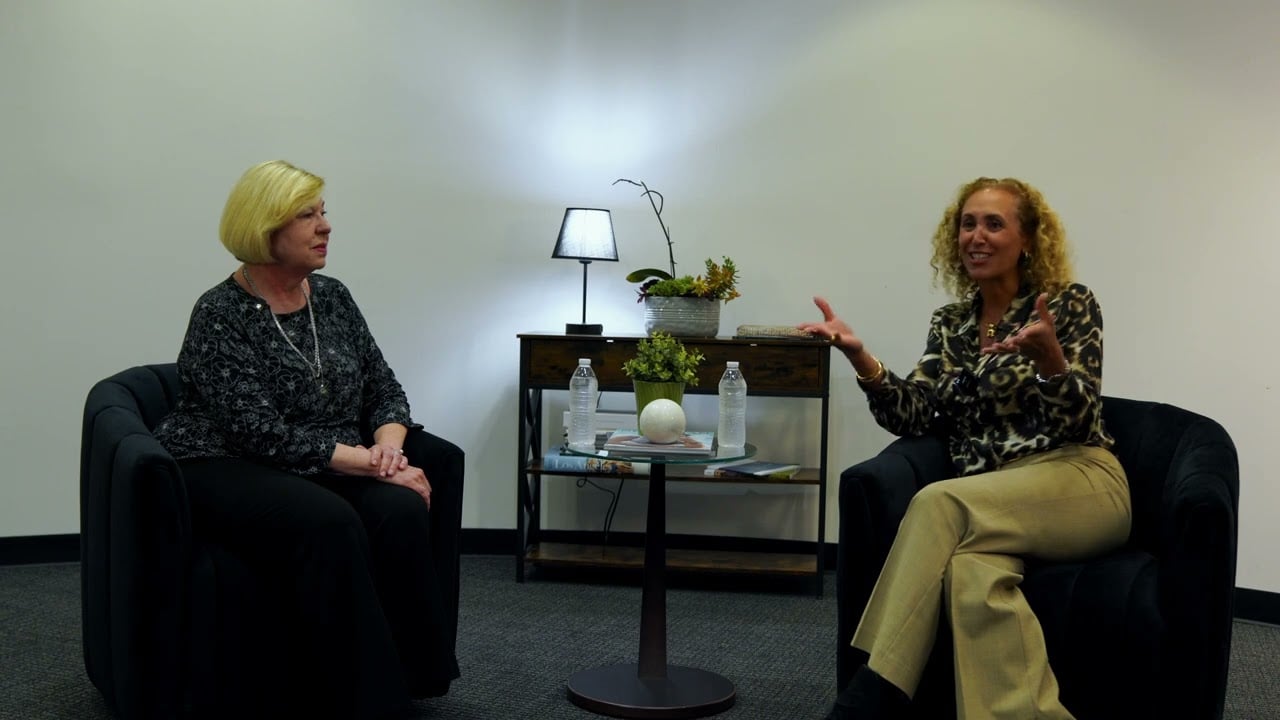
This guide started as an episode of the Aragone and Advisors podcast, a conversation with Diana Meinhold, owner of Anchor Fiduciaries. It runs about twenty seven minutes and covers what the role actually involves day to day, which is a good deal less dramatic and a good deal more administrative than most families expect. The video is at the top of this page.
Paula Aragone works alongside fiduciaries and probate attorneys every week, and the house is usually the asset that decides how the administration goes. If you are a fiduciary or an attorney, our page for attorneys and fiduciaries explains how we work on the property side, and our trust real estate page covers the sale process from the trustee’s chair.
If you are a family trying to work out which professional you need first (an attorney or a fiduciary), our trusted professional resources page is the place to start. Nobody pays to be mentioned on this site, and we do not accept a fee from a professional for making an introduction, in either direction. You engage whichever professional you choose directly, on their terms.
And if a beneficiary is already threatening to block a sale, read can a beneficiary stop the sale of a trust property before anyone signs anything.
Frequently Asked Questions
What is a professional fiduciary in California?
A person who serves, for pay, as conservator, guardian, personal representative, trustee or agent under a power of attorney for people who are not their relatives, above the client counts set in Business and Professions Code section 6501. They must be licensed by the Professional Fiduciaries Bureau unless an exemption applies.[2]
When would a family bring in a professional fiduciary?
Most often when there is nobody suitable to serve, when the named person cannot take it on, when the family is in conflict, or when the estate is complex enough that an untrained trustee is exposed. A professional fiduciary is also appointed by the court when no appropriate private party is available.
Does a family member serving as trustee need a fiduciary licence?
No. Section 6501 does not count related individuals, so a relative administering a family member’s trust or acting under a family member’s power of attorney is outside the Professional Fiduciaries Act.[2]
Are attorneys and CPAs required to hold a professional fiduciary licence?
No. Section 6530 exempts attorneys licensed by the State Bar, and it exempts CPAs and IRS enrolled agents acting within the scope of their own licence or authorisation.[3]
How do I check that a fiduciary is licensed?
The Professional Fiduciaries Bureau publishes a licence lookup, and the Department of Consumer Affairs license search covers the same records. Check that the licence is current, and read any disciplinary history, before you engage anyone.[1]
What are the requirements to become a professional fiduciary in California?
An applicant must be at least 21, pass a background and credit check, meet a degree or experience requirement, complete 30 hours of approved education and pass the Bureau’s exam. After licensure they complete 15 hours of continuing education each year.[4][1]
Does appointing one take control away from the family?
It moves the administration to a neutral party, which is usually the point. Beneficiaries keep their rights to information and to an accounting, and the fiduciary answers for the decisions. Families in conflict often find the arguments have less to grip when the person holding the title is not one of the siblings.
Can the Professional Fiduciaries Bureau remove a fiduciary or get money back?
No. The Bureau can investigate licence violations and impose sanctions such as fines or formal discipline, but it cannot remove a fiduciary from an appointed role or compel repayment. Those are matters for the probate court.[6]
Does Aragone & Associates get paid for an introduction?
No, in either direction. Nobody pays to be mentioned on this site, and we do not accept a fee from a professional for making an introduction. You engage whichever professional you choose directly, on their terms, and the arrangement is between you and them.
Sources and How This Guide Was Written
Every statutory point in this guide was read from the source while the guide was being rewritten in October 2026. The official California legislative site is not reachable from our research environment, so the Business and Professions Code sections were read on Justia’s copy of the California codes, alongside the Professional Fiduciaries Bureau’s own pages.
- California Department of Consumer Affairs, Professional Fiduciaries Bureau home page, covering the Bureau’s creation, prelicensing education, continuing education and licence verification. Visit the Bureau
- California Business and Professions Code section 6501, definitions, including who is a professional fiduciary and the exclusions. Read the statute
- California Business and Professions Code section 6530, the licensing requirement and the exemptions for attorneys, CPAs and enrolled agents. Read the statute
- California Business and Professions Code section 6533, the requirements for a professional fiduciary licence. Read the statute
- California Business and Professions Code section 6561, the initial and annual statement every licensee files with the Bureau. Read the statute
- Professional Fiduciaries Bureau, File a Complaint Against a Professional Fiduciary, including what the Bureau can and cannot do. Read the guidance
- Professional Fiduciaries Bureau consumer publication, What You Should Know Before Hiring a Professional Fiduciary. Read the guide
Licensing rules and Bureau procedures change. Verify any licence with the Professional Fiduciaries Bureau before you engage anyone, and confirm your own situation with your attorney.
Stay Connected
New posts on Orange County trust and probate real estate land every week. Subscribe to the blog or listen to the podcast on Spotify. You can also find Paula on Instagram and YouTube.
Paula Aragone
Aragone & Associates
949-415-4784 | [email protected]
Paula Aragone, CA DRE #01364746
Aragone & Associates | First Team Real Estate, CA DRE #01008773
4 Corporate Plaza Dr #100, Newport Beach, CA 92660
This article is general information about California trust administration and professional fiduciaries and is not legal or tax advice. Nobody pays to be mentioned on this site and no fee is accepted for an introduction. Verify any licence with the issuing body before you engage anyone, and confirm your own situation with your attorney or your accountant.
Tags: professional fiduciary, licensed fiduciary California, Professional Fiduciaries Bureau, successor trustee, trust administration, conservatorship, trust property sale, Orange County trust real estate

Paula Aragone
Aragone & Associates | First Team Real Estate
Paula has spent 23 years in Orange County real estate, with more than 900 transactions and over $900 million in sales behind her. She holds the CPRES, SRES, Certified Luxury and Certified Relocation Specialist designations, is a member of Luxury Portfolio International, and went to law school before building her practice around probate, trust, divorce and luxury property.
Weighing whether the estate needs a professional fiduciary?
Tell Paula about the house and the family situation. She will tell you honestly whether a professional fiduciary is likely to help, and what the property side of the administration will involve.