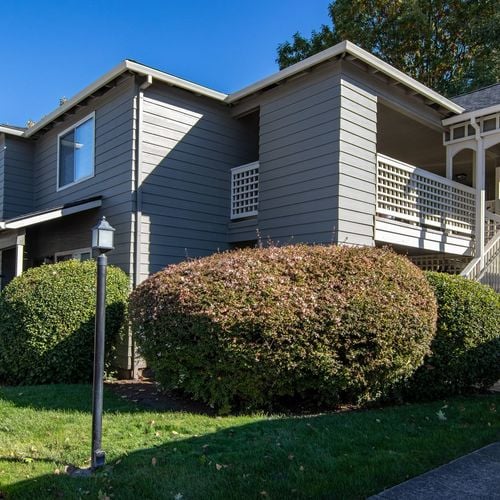
The conversation usually starts the same way. You bought in Mission Viejo in the 1990s for something in the $200,000s. The house is worth well over a million now, the kids are gone, and the pool has turned into a chore you pay someone else to do. You want one level, no stairs, a shorter drive to the grandkids. Then someone at dinner says the words capital gains, and the whole plan sits untouched for eight months.
Those eight months usually cost more than the tax does.
The federal exclusion that protects most American home sellers was written for most of America. Orange County outgrew it a long time ago, and almost nobody tells you that until you are already in escrow.
What the federal exclusion actually covers
The IRS states it plainly on its page about the sale of your home. You may qualify to "exclude up to $250,000 of that gain from your income," and "up to $500,000 of that gain if you file a joint return with your spouse." To qualify you need to have owned the home for "at least 24 months (2 years) out of the last 5 years" and used it "as a residence for at least 24 months (2 years) of the previous 5 years."
Read that again, because there is no age anywhere in it. No senior rate. No separate break for people over 55. Nothing that grows with how long you lived there. A couple who owned a house for four years gets exactly the same $500,000 as a couple who raised three children in theirs over thirty-four years.
That is the whole problem, in one sentence.
Do the subtraction on your own house
Your gain is not your sale price. It is the sale price, minus your selling costs, minus your adjusted cost basis. Adjusted basis is what you originally paid plus the improvements you can actually document.
Below are two illustrative examples. They are hypotheticals built to show the arithmetic rather than client files. Your own numbers will differ.
| Line | Mission Viejo, bought 1994 | Corona del Mar, bought 1991 |
|---|---|---|
| Original purchase price | $265,000 | $540,000 |
| Documented improvements | $140,000 | $310,000 |
| Adjusted cost basis | $405,000 | $850,000 |
| Sale price | $1,500,000 | $3,200,000 |
| Selling costs | $90,000 | $192,000 |
| Gain | $1,005,000 | $2,158,000 |
| Joint exclusion applied | $500,000 | $500,000 |
| Gain still exposed | $505,000 | $1,658,000 |
Notice what the improvements column does. In the Mission Viejo example, $140,000 of documented work takes $140,000 straight off the exposed gain. That is not a rounding detail. For most downsizers it is the single largest number they have any control over.
California gives you nothing back on the leftover
This is where Orange County sellers get hit a second time, and it surprises people who have only read national articles. The California Franchise Tax Board puts it without ceremony on its page covering capital gains and losses: "California does not have a lower rate for capital gains," and "All capital gains are taxed as ordinary income."
So the amount above your exclusion is exposed federally, and then exposed again at California ordinary income rates, in the same tax year, stacked on top of whatever else you earned. A seller in Laguna Niguel who reads a national blog post about the $500,000 exclusion and stops there has seen maybe half of the picture.

Not sure what your number looks like?
We build net sheets for Orange County downsizers that show the tax line, not only the commission and closing costs, so you can make the decision on real figures.
Schedule a Free ConsultationProposition 19 solves a different problem
Plenty of downsizers in this market have heard that Prop 19 takes care of them, and it does, for one specific thing. As covered in our full guide to how Orange County seniors transfer their property tax base under Prop 19, eligible homeowners 55 and older can carry their assessed value to a replacement home anywhere in California. That is a real saving and for many families it is worth thousands every year.
It does nothing whatsoever about the income tax on your gain. Different tax, different agency, different form, different year.
Treating Prop 19 as the complete tax answer to downsizing is the most common and most expensive misunderstanding in this market, and I will say plainly that the industry has been sloppy about it. Prop 19 is about what you pay every year going forward. Capital gains is about what you pay once, on the way out.
The basis file is where the money actually is
Here is the part you control. Capital improvements raise your adjusted basis, and every dollar of basis is a dollar the gain does not include.
Think about the 2003 kitchen. The roof in 2011. The re-pipe after the slab leak. The room addition that needed a permit pulled with the City of Yorba Linda. The hardscape and the retaining wall out back. The HVAC that finally gave up in 2018. Most owners who have been in a house since the Clinton administration have six figures of this sitting in a box in the garage, undocumented and therefore invisible to the IRS.
What does not count is ordinary upkeep. Repainting a bedroom, replacing a broken dishwasher with a similar one, fixing a leak. Those keep the house working rather than adding to it.
If you spend one afternoon this month on anything connected to your move, spend it on this. It is the highest return hour available to a downsizer, and no agent or CPA can do it for you, because the receipts are in your house.

Five things to do before you list
- Find the closing statement from your original purchase. If it is gone, the title company that handled the sale or the Orange County Clerk Recorder can usually help you reconstruct it.
- Build the improvement file. Permits, invoices, cancelled checks, and the contractor's final lien release all help, and a permit record is often easier to pull from the city than you expect.
- Get a written estimate of the gain from a CPA before you sign a listing agreement, not after you accept an offer. The order matters, because by then your options have narrowed to almost nothing.
- Ask your agent for a net sheet that carries the tax line. If the net sheet stops at commission and closing costs, it is telling you a number you cannot actually plan around.
- If your marital or filing status has changed recently, or is about to, raise it with the CPA early. The exclusion amount and the basis treatment can both move with it, and that is a question for a tax professional rather than for your agent.
Four ideas that usually do not work
A 1031 exchange. Those are built for investment property. Your primary residence does not qualify, and the workarounds people describe at parties tend to collapse on contact with a CPA.
Moving out and renting the house first so it becomes an investment. This is the one that costs people real money. You can trip the use test and lose part of an exclusion you already had, which is the opposite of the intended result.
Waiting for the limit to rise. Plan around the figures the IRS publishes today. Building a retirement move around a change that has not happened is not planning, it is hoping.
Gifting the house to your children before you sell. A lifetime gift and an inheritance after death are treated very differently for basis purposes, and the gift version usually produces the worse outcome. Speak to a tax attorney before anyone touches title.
So should the tax stop you from downsizing?
Usually no, and I would rather give you my actual opinion than hedge.
The capital gains bill is a one-time cost on a gain you have already earned. The cost of staying in an Orange County home you have outgrown is annual, and it compounds: maintenance inflation, insurance that keeps climbing or does not renew at all, and equity doing nothing for you while you pay to heat rooms nobody sleeps in.
I have seen it go the other way, though. If your improvement records are genuinely a mess and three weeks of digging could add six figures to your basis, dig first. If a filing status change is close, the timing is worth a conversation. The point is to make the call on your own numbers rather than on something a neighbor said over dinner.
One more thing worth saying out loud. Most people in this position are not avoiding the move because of the tax. They are avoiding it because leaving the house where their family grew up is hard, and the tax is a respectable reason to postpone a decision that is really about something else. That is worth naming, because it changes what kind of help you actually need.
Frequently Asked Questions
Is there still a one-time exclusion for homeowners over 55?
The rule the IRS publishes today contains no age test at all. It gives up to $250,000 of excluded gain to a single filer and up to $500,000 on a joint return, and it asks only that you owned and lived in the home for at least 24 months out of the previous five years. If someone is telling you about an age-based break, ask them to show you where the IRS says so.
Does Proposition 19 reduce the capital gains tax when I downsize?
No. Prop 19 lets eligible California homeowners 55 and older transfer their property tax base to a replacement home, which lowers the annual property tax bill. Capital gains is a separate income tax on the profit from the sale, owed to the IRS and to California. Qualifying for one has no effect on the other.
What kind of work can I add to my cost basis?
Capital improvements that add value or extend the life of the home generally count, and ordinary repairs and maintenance generally do not. A room addition, a re-pipe, a new roof, a permitted remodel, and new hardscape are the kinds of items worth documenting. Your CPA makes the final call on each one, so bring the file rather than a summary.
Will my agent's net sheet show me the tax?
Most net sheets in this market stop at commission, title, escrow, and county fees. Ask for one that carries an estimated tax line as well, built with your CPA's figure. A net sheet without that line can be off by several hundred thousand dollars in Orange County, which is enough to change what you can afford to buy next.
Stay Connected
New Orange County real estate guides every week. Subscribe to the blog, listen to the podcast on Spotify, or follow along on Instagram, LinkedIn and YouTube.
Paula Aragone
Aragone & Associates | First Team Real Estate
Call or text: 949-415-4784
Email: [email protected]
We are real estate professionals, not tax advisors, CPAs or attorneys. Nothing here is tax or legal advice. Every figure in this article is illustrative. Please confirm your own numbers with a qualified CPA or tax attorney before making a decision about selling.
Paula Aragone, CA DRE #01364746
Aragone & Associates | First Team Real Estate, CA DRE #01008773
4 Corporate Plaza Suite 100, Newport Beach, CA 92660
Tags: downsizing, capital gains tax, Orange County real estate, senior downsizing, Proposition 19, cost basis, selling a home, Mission Viejo

Paula Aragone
Paula has spent 23 years and more than 900 transactions helping Orange County families through the sales that come with a life change rather than a lifestyle upgrade. She holds the SRES designation for senior clients and the CPRES certification for probate and estate property, and she came to real estate from law school, which shows up in how carefully she reads a contract.
Thinking about downsizing in Orange County?
Bring us your address and the year you bought. We will show you what the move looks like on paper before you commit to anything.
Call (949) 415-4784Schedule a Consultation